

Shimano this, SRAM that
Groupset Explained: What the Hell Is a Groupset Anyway?
Groupset explained.
Everything you need to know, in plain English. No faff.
If you’ve ever browsed bike listings or tried to chat with a bike nerd, you’ve probably heard the word groupset tossed around like it means something. Spoiler: it actually does, and if you’re buying, selling, or fixing bikes, you should probably know what the hell it is.
Let’s get the groupset explained by breaking it down in plain English.
| Buzzword | What It Is | Plain-English Meaning |
|---|---|---|
| Crankset | Cranks + chainrings | The arms and cogs you pedal. Powers the chain. |
| Cassette | Rear gear cluster | The stack of cogs at the back wheel — more = smoother shifting. |
| Derailleur | Front/rear gear shifter | The mech that moves the chain from one gear to another. |
| Chainring | Front gear teeth | The round thing attached to your cranks — affects how hard it feels to pedal. |
| Shifters | Gear controls | The buttons or levers on your handlebars that change gear. |
| Brake Calipers | Stopping mechanism | The part that squeezes your wheels to stop the bike. |
| Hydraulic Disc Brakes | Oil-powered brakes | High-power, low-maintenance brakes — very popular. |
| Mechanical Disc Brakes | Cable-powered brakes | Easier to maintain but less stopping power than hydraulic. |
| 1x / 2x / 3x | Gear setup | “1x” = one front gear, simpler. “2x” or “3x” = more front gears, older setups. |
| Clutch Derailleur | Chain stabiliser | Keeps chain tighter on bumpy terrain — big for MTB/gravel. |
| Electronic Shifting | Motorised gear shifting | Uses buttons and servos instead of cables. Found on high-end bikes. |
| Gear Ratio | Pedal effort balance | Low gear = easier for hills, high gear = faster on flat ground. |
So, What Is a Groupset?
Think of it like the engine room of your bike. The groupset is all the mechanical stuff that makes it go, stop, and shift. Basically, it’s the gears and brakes – plus a few other clever bits.
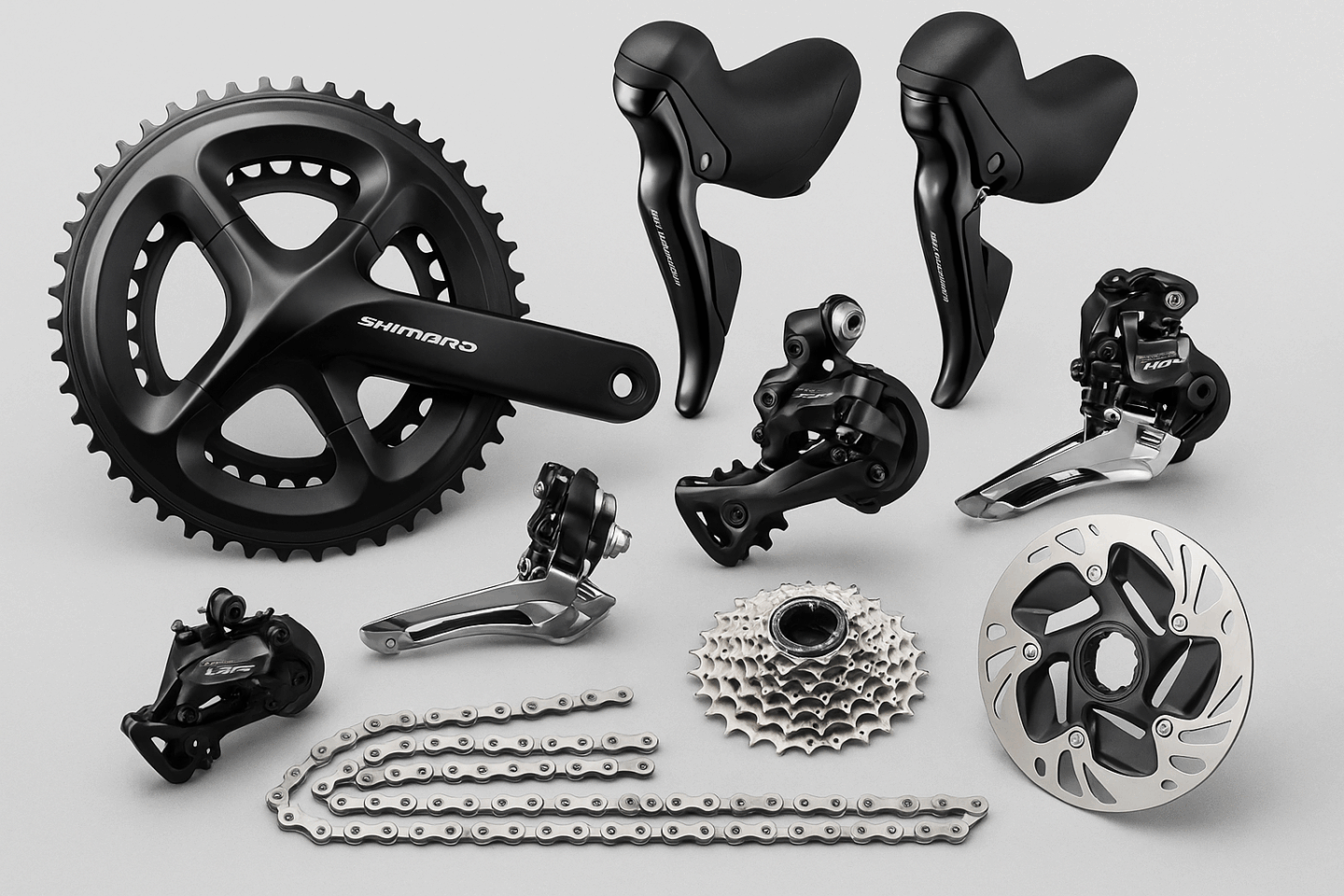
A typical groupset includes:
- Shifters (the levers on your handlebars)
- Derailleurs (the things that move your chain)
- Chain
- Cassette (your rear gear cluster)
- Crankset (where the pedals attach)
- Bottom bracket (the spinny bit in the frame)
- Brakes (unless it’s a frame with integrated ones)
If it moves, clicks, or helps you change gear, it’s probably part of the groupset.
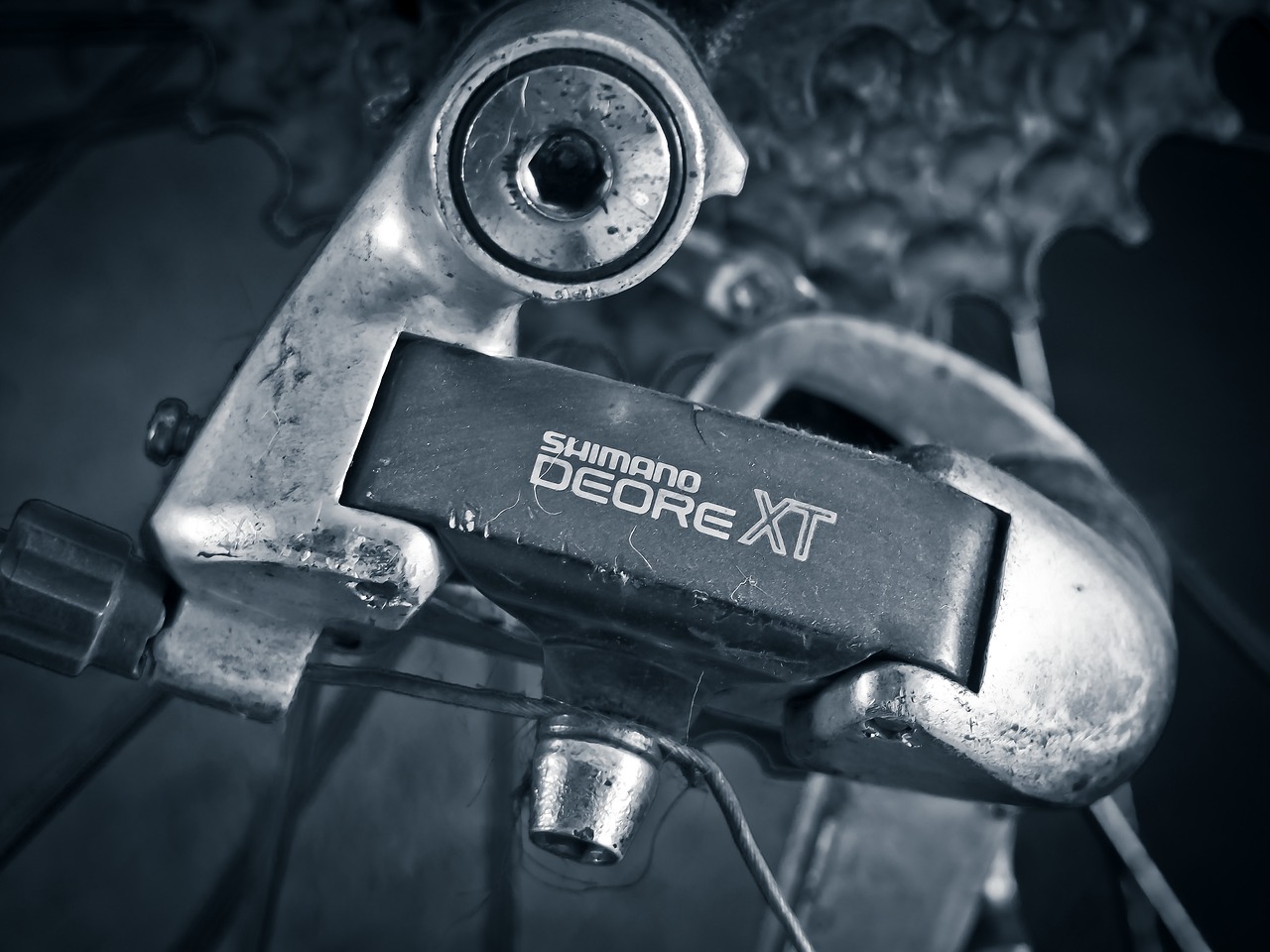
Check out the difference between a £100 bike and a £1000 bike
Right, so you’re eyeing up bikes online – one’s £100 and looks decent, the other’s a grand and looks… also decent. What gives? Is the pricey one dipped in gold? Does the cheap one explode if you ride too fast?
Let’s break it down so you don’t get mugged off.
Because here’s the thing: two bikes might look similar in photos, but underneath, they’re worlds apart. The difference often comes down to build quality, materials, components, and how long it’ll actually last. In other words, you might save a few quid upfront, but end up paying for it in parts, repairs, or even replacement bikes later on.
So, before you jump on the first bargain that pops up, here’s what to look for—and what to avoid—when comparing bike prices.
Why Should I Care?
Because your groupset basically decides:
- How smooth your ride is
- How many gears you’ve got
- How easy it is to climb hills (or bomb down them)
- Whether your bike feels like a rocket or a shopping trolley
It’s also one of the biggest price tags on any bike. So when someone says, “This has Shimano 105,” they’re flexing (a little). And if someone says “Tourney,” they’re… not.
Shimano vs SRAM vs Campagnolo: The Big Names
Here’s a quick guide to the usual suspects:
| Brand | Vibe |
|---|---|
| Shimano | Reliable, everywhere, solid reputation |
| SRAM | Lighter, techy, used on higher-end bikes |
| Campagnolo | Italian, posh, mostly on road bikes |
Shimano’s the most common. SRAM’s the cool tech cousin. Campagnolo is… let’s just say, espresso-sipping roadies love it.

Shimano Road Bike Groupsets (Entry to Pro)
| Tier | Name | What It Means |
|---|---|---|
| Entry Level | Tourney / Claris | Basic, does the job |
| Mid-Range | Sora / Tiagra | Solid everyday stuff |
| Upper Mid | 105 | Fast, smooth, found on proper bikes |
| High-End | Ultegra | Light, race-ready, slick shifting |
| Top Tier | Dura-Ace | Pro-level. Ridiculously nice (and pricey) |
Shimano MTB Groupsets (Trail to Terror)
| Tier | Name | What It Means |
|---|---|---|
| Entry Level | Tourney / Altus | For light trails or pub crawls |
| Mid-Range | Acera / Alivio | Bit better, but still entry stuff |
| Trail-Ready | Deore | Proper kit. This is where it starts getting good |
| Trail King | SLX | Tough, reliable, shift-under-load gear |
| Top End | XT / XTR | Light, strong, used by racers |
What Should You Look For?
Here’s the straight-up advice:
- Commuters/Weekend Riders: Tiagra, Deore, or anything above Tourney is decent. Smooth, dependable, not flashy.
- Enthusiasts or Longer Riders: Shimano 105 or SRAM Rival minimum. Better feel, lasts longer, faster shifts.
- Racers or Show-offs: Ultegra, Dura-Ace, SRAM Force/X01 or better. But your legs better match the spec.
- And if it’s listed as “mixed groupset” — that’s not bad! Just means the previous owner Frankensteined a few parts to keep it running.

Red Flags When Buying Secondhand
- If it says “Shimano gears” but doesn’t say which Shimano: ask. Tourney and Tiagra are worlds apart.
- Rusty chains, worn cassettes, or floppy shifters = extra costs down the line.
- Missing parts? That ain’t a groupset, that’s just… sadness.
Final Word: Know Your Bits, Avoid the Bulls***
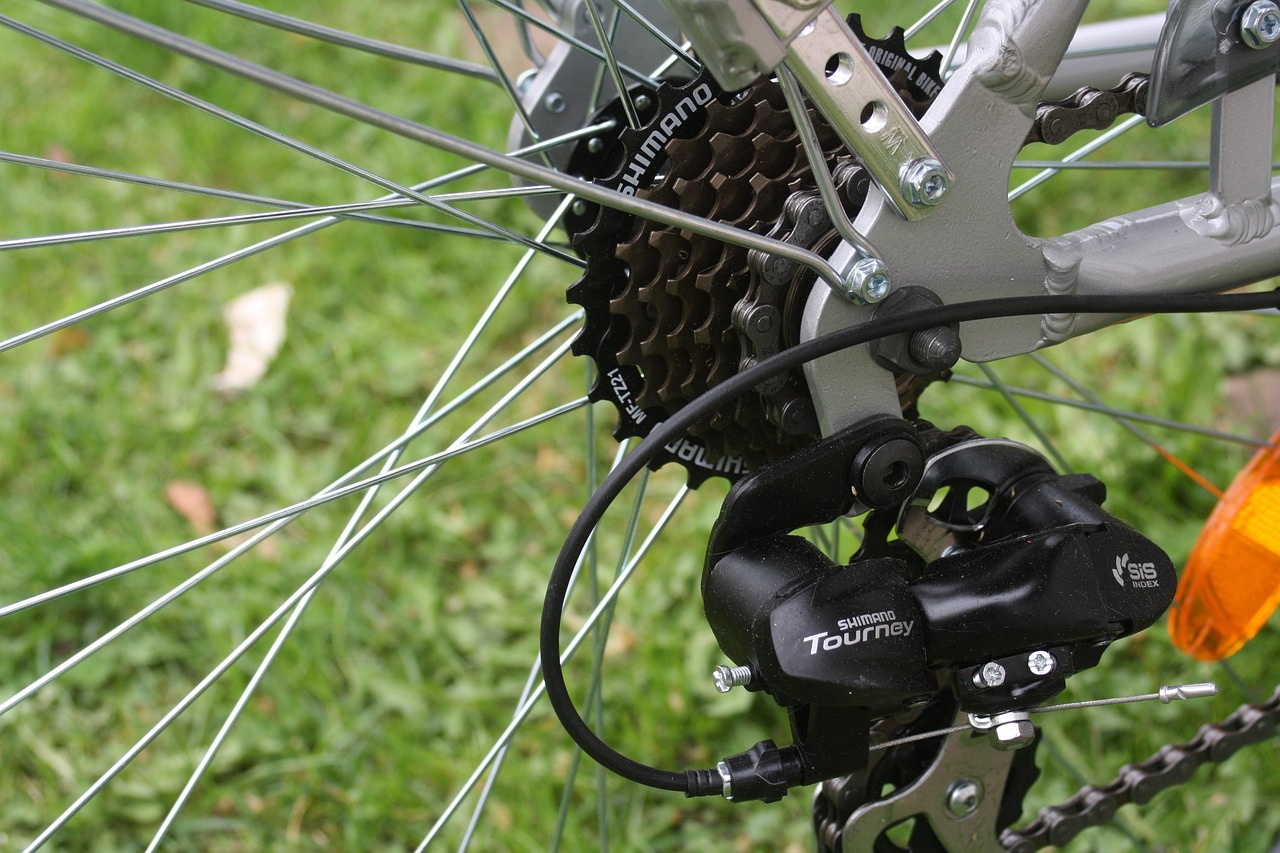
If someone’s trying to flog a bike and they’re acting like “Shimano” alone makes it premium, ask for the exact model. A £2,000 bike and a £200 one can both say “Shimano” on them. What matters is what level.
Think of it like trainers:
- Tourney = school P.E. plimsolls
- 105 = Nike runners
- Dura-Ace = carbon-fibre moon boots for your feet

Got a bike for sale but don’t know the groupset? Grab your phone, take a pic of the derailleurs and shifters, and look them up. Buyers will thank you, and you’ll look like you know your stuff (even if you don’t).
Next Up: How to Spot a Frankenbike - and When That’s a Good Thing
Or fancy writing your own listing that doesn’t sound like it was typed with oven mitts?
Check out our Bike Listing Checklist on Shifta.